
Sentry, Tracker and Mine Dogs: The Other Three Jobs
In the dense jungles and sprawling bases of Vietnam, military working dogs performed far more than the well-known scout duties. Three specialized roles—sentry, tracker, and mine detection—proved equally vital. Each demanded handlers who understood their dog’s unique personality, because a single mismatch could cost lives in the humid darkness or tangled undergrowth.
Air Force sentry dogs transformed night security at major installations. At Tan Son Nhut, Bien Hoa, and Da Nang, these alert German Shepherds and Belgian Malinois walked the flight lines and perimeter fences when human vision failed. Their handlers moved in near silence, trusting the dog’s ears and nose to detect sappers long before trip flares or guards noticed movement. One alert bark or rigid stance often triggered the entire base to light up and respond.
Sentry Dogs: Guardians of the Perimeter
These dogs lived for routine. Their training emphasized controlled aggression and rock-steady nerves under illumination flares and distant mortar fire. Unlike scouts who slipped through enemy territory, sentry dogs patrolled predictable routes night after night. Handlers learned to read the subtle shift in a dog’s gait or the sudden pricking of ears that signaled danger. Many teams developed such trust that the dog would freeze mid-stride at the first hint of wire being cut, giving precious seconds for a response.
Tracker Teams: Following the Trail
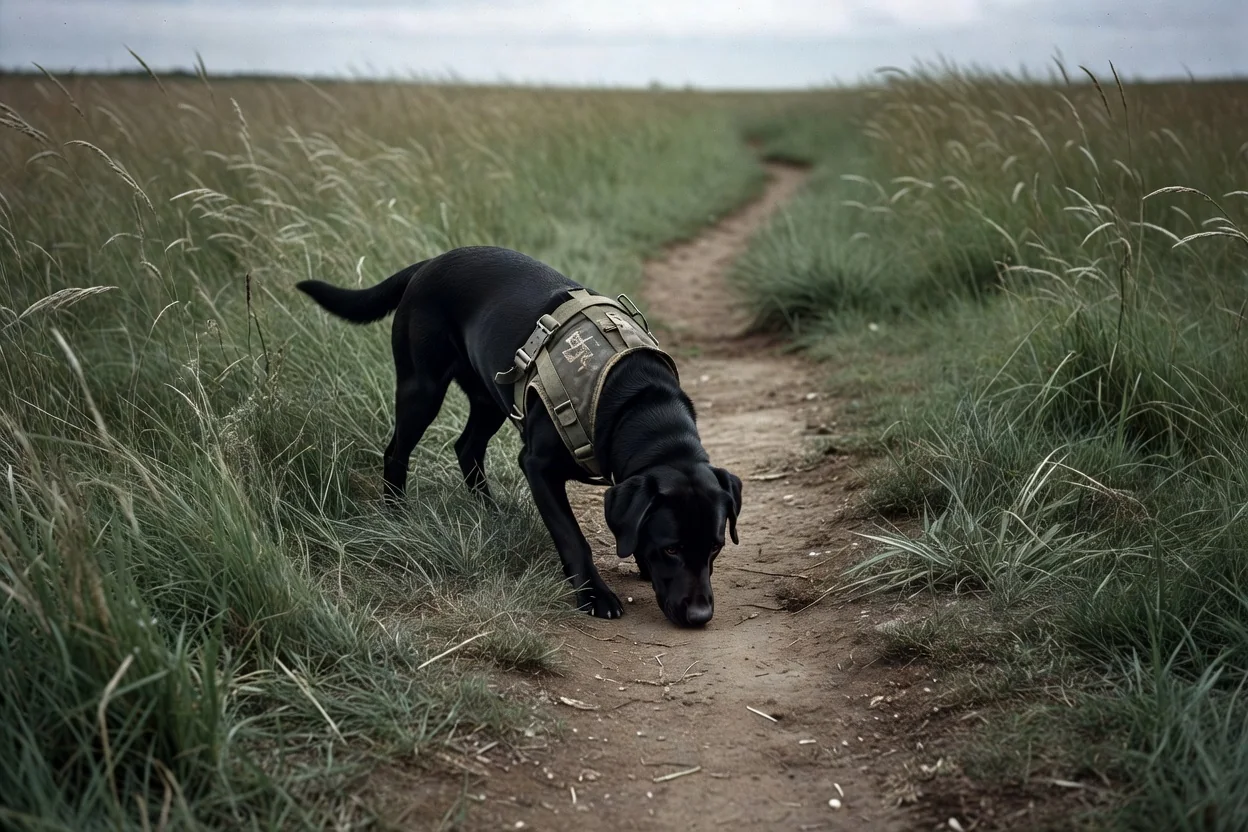
After firefights, Army units like the 1st Cavalry Division and 101st Airborne turned to tracker dogs—often calm-natured Labrador Retrievers or mixed breeds. These dogs followed scent trails through thick bamboo and across streams where human trackers lost the enemy. Their handlers carried lightweight rucksacks and moved quickly, relying on the dog’s ability to distinguish fresh enemy scent from hours-old trails. Success depended on the dog’s willingness to ignore distractions like wildlife and decaying jungle matter while maintaining focus on one specific human odor.
The work was exhausting and dangerous. Trackers often led patrols directly toward hidden enemy positions or ambush sites. Yet their contribution shortened the time between contact and pursuit, preventing many enemy fighters from melting back into the countryside.
Mine and Tunnel Dogs: The Quiet Specialists
Mine detection dogs required the steadiest temperament of all. Trained to ignore gunfire and explosions, they methodically swept roads, landing zones, and suspected tunnel entrances. Their noses could locate buried explosives, trip wires, and punji pits that metal detectors missed in wet soil. Tunnel dogs, a closely related specialty, learned to signal at the cool, moist air flowing from hidden entrances without ever entering the claustrophobic passages themselves.
Each role followed its own training pipeline back in the States. Sentry dogs practiced night aggression and perimeter drills. Trackers spent months learning to discriminate human scent trails in varied environments. Mine dogs drilled on inert explosives in progressive difficulty until their alerts became almost automatic. Handlers rotated through specialized courses that taught them to read breed-specific body language and maintain the delicate balance between affection and discipline.
Key points
- Sentry dogs: night perimeter defense on airbases
- Tracker dogs: following a scent line after contact
- Mine dogs: explosives, tripwires and tunnel mouths
| Role | Typical Breeds | Primary Skill | Key Temperament |
|---|---|---|---|
| Sentry | German Shepherd, Malinois | Night perimeter detection | Controlled aggression, steady nerves |
| Tracker | Labrador Retriever, mixed hounds | Following fresh scent trails | Focus, endurance, low distraction |
| Mine/Tunnel | German Shepherd, Belgian Malinois | Explosive and void detection | Calm methodical nature, bomb-proof |
These dogs and their handlers formed an invisible safety net across Vietnam. Their contributions rarely made headlines, yet entire bases slept easier, patrols moved faster, and countless soldiers avoided hidden traps because of four-legged teammates whose courage came naturally and whose training was anything but ordinary. Their legacy continues to shape modern military working dog programs, proving that different missions demand different hearts and noses.