
War Dogs in Vietnam: How Roughly 4,000 Dogs Served Between 1965 and 1973
In the dense jungles and humid air of Vietnam, thousands of four-legged soldiers worked alongside American troops from 1965 to 1973. Roughly 4,000 military working dogs served in one of the most demanding environments imaginable, using senses sharpened by evolution to detect threats that technology could not. These dogs became trusted companions, often forming bonds so deep that handlers still speak of them decades later with quiet reverence.
The program drew from earlier successes in World War II and Korea, but Vietnam presented unique challenges. Handlers trained at Lackland Air Force Base in Texas before deploying, learning to read subtle changes in a dog’s posture or breathing that signaled danger. Most dogs were German Shepherds or Belgian Malinois, chosen for their intelligence, drive, and adaptability. Their presence gave infantry units a critical edge in an invisible war.
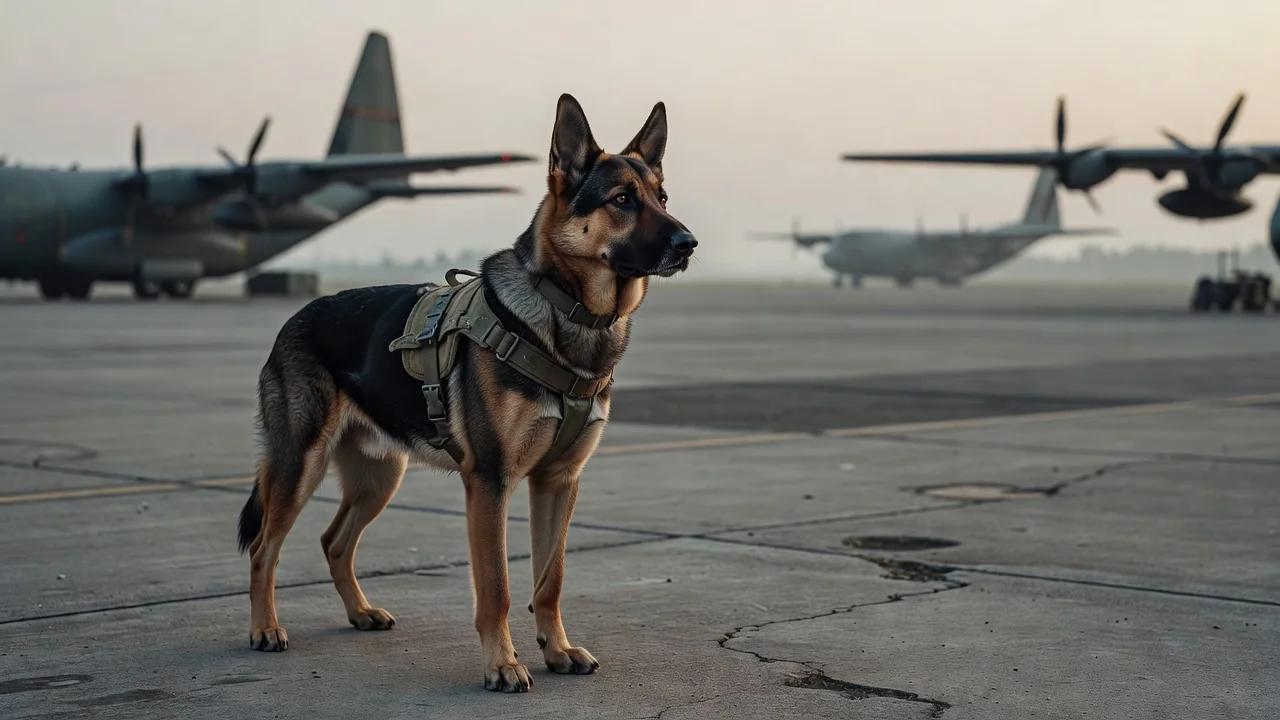
The Four Primary Roles
Each dog specialized in one of four critical missions. Scout dogs walked point, alerting patrols to enemy ambushes hundreds of meters away through scent and sound. Sentry dogs guarded perimeters at night, their keen hearing detecting intruders long before radar or trip flares. Tracker dogs followed blood trails or disturbed vegetation to locate wounded soldiers or fleeing enemies. Mine and tunnel dogs, often smaller breeds like Labrador Retrievers, methodically searched for buried explosives or crawled into Viet Cong tunnel networks that humans feared to enter.
These roles demanded different temperaments. A calm, methodical dog excelled at mine detection, while an energetic, alert animal thrived as a scout. Handlers learned to trust their partner’s instincts even when their own senses told them otherwise. Many veterans credit their dogs with saving dozens of lives during a single patrol.
Units and Operations
The Army organized Infantry Scout Dog Platoons (ISDP), embedding them with line infantry units across South Vietnam. The 25th Infantry Division’s 44th IPSD and similar platoons operated in the Central Highlands and Mekong Delta. Meanwhile, the Air Force maintained sentry dog sections at major airbases including Tan Son Nhut, Da Nang, Bien Hoa, and Phan Rang. These teams protected multimillion-dollar aircraft and vital supply depots from sapper attacks.
Conditions were brutal. Dogs endured monsoons that turned trails into rivers, temperatures that caused heat exhaustion, and insects that spread disease. Handlers carried extra water and treated their partners for everything from hookworm to jungle rot. Despite the hardship, the bond between man and dog often became the only constant in a chaotic war.
The Cost and the Homecoming
Official records indicate approximately 281 dogs were killed in action, though the true number of dogs lost to illness, injury, or exhaustion was higher. Many succumbed to tropical diseases for which they had no immunity. Perhaps most heartbreaking was the fate of the survivors. Only a small fraction—fewer than 200—were allowed to return to the United States. The vast majority were either transferred to the South Vietnamese military or euthanized when their units stood down. Military policy at the time classified the dogs as equipment, making their return prohibitively expensive.
| Role | Primary Breeds | Typical Missions | Approx. Numbers Deployed |
|---|---|---|---|
| Scout | German Shepherd, Malinois | Point patrol, ambush detection | 1,500+ |
| Sentry | German Shepherd | Base security, night watch | 1,200+ |
| Tracker | German Shepherd, Labrador | Following trails, locating personnel | 600+ |
| Mine/Tunnel | Labrador, smaller Shepherds | Explosive detection, tunnel clearance | 700+ |
Today, statues and memorials honor these forgotten warriors. Handlers who made it home often spent years searching for information about their partners. The story of Vietnam’s war dogs reminds us that courage and loyalty come in many forms—some on two legs, others on four. Their service remains one of the quieter chapters in military history, yet one that continues to resonate with anyone who understands the unique partnership between human and canine soldiers.
- Handlers often slept beside their dogs in the field for mutual protection and comfort.
- Dogs could detect enemy presence up to 400 meters away in ideal conditions.
- Many handlers still carry photographs of their dogs more than fifty years later.